Sidewalk Installation
Access paths and walkway work around grade changes.
A retaining wall handles grade changes, controls drainage, and can turn a sloped, unusable yard into flat, usable space, but it lives or dies on drainage and proper base work. Here is what retaining walls cost in the Casper area, the main wall types, and what to ask so your wall does not bulge or lean over time.
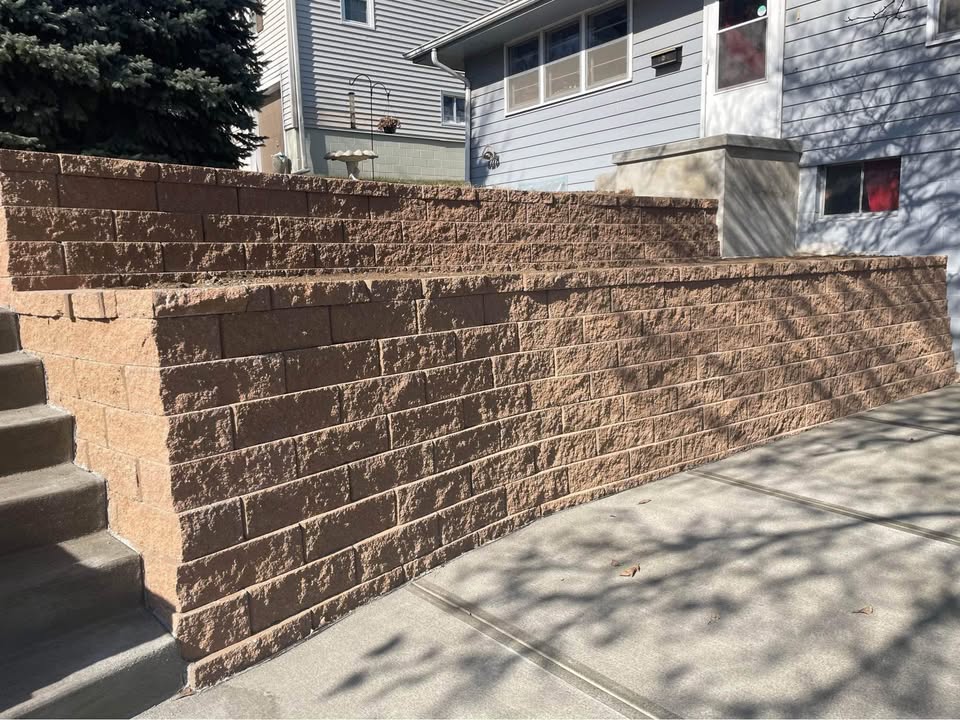
Retaining walls are usually priced by the square foot of wall face (length times height) and typically run about $20 to $60 per square foot in the Casper area, depending on material and height. What moves the cost:
Request a quote with the wall's approximate length, height, and what it will hold back.
A retaining wall is not just a visual feature. Water pressure building up behind the wall is the number-one cause of retaining wall failure, so drainage planning, gravel backfill, and a properly placed drain pipe matter as much as the wall face you see. A wall built without drainage can bulge, lean, or fail even when it looks solid.
The base matters too: a compacted, level footing keeps the wall from settling unevenly. Over Wyoming clay, both drainage and base prep are what keep a wall standing straight for the long term.
Retaining wall projects often tie into patios, walkways, access paths, or broader yard-layout changes. Looking at the surrounding concrete and grade conditions makes planning easier and can save cost by coordinating the work. Common goals include holding back a slope, improving drainage control, creating more usable yard space, and supporting a patio or walkway above or below.
Usually $20 to $60 per square foot of wall face depending on material and height. Block walls are lower, poured concrete and taller engineered walls higher.
Segmental concrete block, poured concrete, natural stone or boulder, and timber. Block and poured concrete are most common for durability and drainage control; the right one depends on height, load, and looks.
Water pressure behind a wall is the leading cause of failure. Gravel backfill and a drain pipe relieve it. Without drainage, a wall can bulge, lean, or fail even if it looks well built.
It varies locally, but taller walls (generally over about four feet) often need engineering and a permit, while shorter landscape walls usually do not. Confirm local requirements before building.
Visit the full FAQ page for more on walls, walkways, and grading.
Access paths and walkway work around grade changes.
Patio layouts that may tie into retaining work.
Repair options if surrounding concrete has shifted or failed.
You can also review sidewalk installation, patio installation, concrete repair, and the areas we serve page.